
Yongquan Temple: Fuzhou’s Majestic Mountain Buddhist Sanctuary
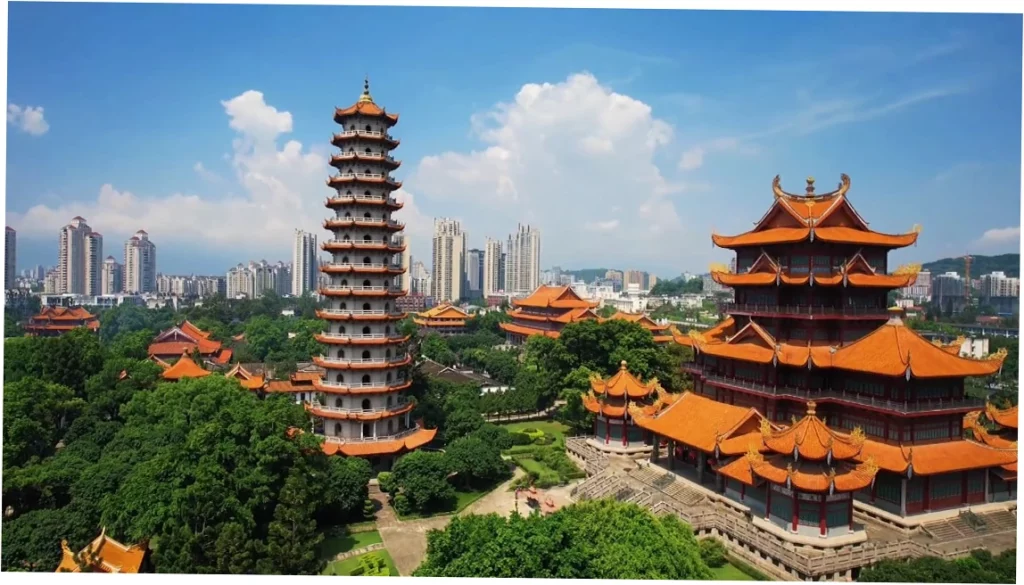
Discover the awe-inspiring beauty of Yongquan Temple, perched high on Fuzhou’s historic Drum Mountain (Gushan). Known as the "Crown of Fujian Temples," this sacred site blends thousand-year-old architecture with breathtaking forest scenery. Whether you’re seeking ancient calligraphy, ornate stone carvings, or spiritual tranquility, our guide provides essential insights into visiting this cultural masterpiece. Plan your journey to explore Fuzhou's deepest religious traditions, discover hidden cliffside trails, and enjoy panoramic views in one of China’s most prestigious and historic mountain temples.
Let’s get right to it – Yongquan Temple is way more than your average Chinese Buddhist monastery.I’ve been to loads of temples, and I’m telling you, this 10th-century treasure in Fuzhou really stands out.
It’s got this amazing mix of beautiful nature, deep history, and real, active spiritual life.It was founded way back in the Five Dynasties period.The temple sits right up against Gushan Mountain.You’ll find ancient springs there, iron trees that are a thousand years old, and a Chan (Zen) Buddhist tradition that’s never stopped.
That’s what draws in pilgrims, history lovers, and folks just looking for some peace.So here’s why you should check it out, and how to really get the most from your visit.
Table of Content
Defining Yongquan Temple’s Core Identity
Historical Foundations and Spiritual Mechanism
Let’s talk about how it started and why.A monk named Shenyan set up Yongquan Temple around 908 AD.He had the backing of the Min Kingdom.It wasn’t built just for royalty to pray at.They founded it because they were looking for a really peaceful spot for meditation.
They picked this place because of a spring that never stops flowing – that’s the Yongquan it’s named after.That spring meant more than just water.It stood for wisdom that keeps flowing in Chan Buddhism.
That made the temple a place for real spiritual growth, not just for going through the motions of rituals.
Now, about its buildings and beliefs.The layout is your classic Chinese Buddhist monastery style.Halls like the Mahavira Hall and the Scripture Library are lined up along a main path.But the cool thing is how it’s all built into the mountain slope.
In terms of belief, it’s part of the Linji school of Chan Buddhism.That means it focuses on getting insight directly and on meditation, way more than on studying texts.People visiting often wonder, What do they actually do here?
Or How is this Buddhism different?Well, the answer is all about zazen – that’s sitting meditation – and working on koans.You can try both for yourself in the temple’s meditation halls.
Key Entities and Their Interrelationships
Let’s talk about the people and things at Yongquan Temple.You’ve got the founder, Shenyan, and later abbots like the famous monk Hongyi, who helped bring the temple back to life in modern times.Then there’s the current group of monks living there.
Some key artifacts are the Iron Trees—they’re said to bloom only once every 60 years—plus ancient stone carvings and, of course, the spring the temple is named after.These things aren’t separate.The monks take care of the trees, seeing them as symbols of patience.
The stone inscriptions record the temple’s past.All this weaves together nature, history, and daily practice into one connected story.That’s why people often search online, asking things like Who was the most famous monk at Yongquan Temple?
Or What are the Iron Trees there?It shows how these elements spark people’s interest.
Now, about the ideas and rituals.Key concepts are Yongquan, meaning eternal spring, which is a metaphor for enlightenment, and Chan, the type of Buddhism practiced at the temple.Rituals bring these ideas to life.
There’s daily chanting, regular meditation, and big yearly events like celebrating Buddha’s Birthday.So you’ll see folks searching for Yongquan Temple meditation schedule or What rituals can I join at Yongquan Temple?
This connects the big, abstract ideas to real, hands-on activities you can actually do.
Comparing Yongquan Temple to Alternatives
Versus Other Fuzhou Temples
Uniqueness in local context: Compared to Xichan Temple or Linju Temple in Fuzhou, Yongquan Temple offers a more immersive natural setting and a stronger emphasis on active Chan practice.While Xichan is larger and more touristy, Yongquan provides a quieter, more contemplative experience.
I’ve found that visitors debating Yongquan Temple vs Xichan Temple: which is better for meditation?often prefer Yongquan for its secluded ambiance and dedicated meditation programs.
Decision factors: Consider your goals—if you seek historical artifacts, Xichan might edge out, but for spiritual retreats, Yongquan wins. The table below summarizes key differences:
| Feature | Yongquan Temple | Xichan Temple | Linju Temple |
|---|---|---|---|
| Primary Focus | Chan meditation & natural integration | Historical tourism & large-scale rituals | Cultural exhibitions & architecture |
| Best For | Spiritual seekers, nature lovers | History buffs, family tours | Art and architecture enthusiasts |
| Crowd Level | Moderate, quieter weekdays | High, especially weekends | Low to moderate |
| Unique Highlight | Iron Trees, mountain springs | Ancient statues, grand halls | Ming-era structures, gardens |
National and International Benchmarks
Broader perspective: Nationally, Yongquan Temple holds its own against famous sites like Shaolin Temple (martial arts focus) or Lingyin Temple (scenic beauty).It’s less commercialized, offering a purer Chan experience.
Internationally, it compares to Japanese Zen temples but retains distinct Chinese architectural styles and rituals.Searches like How does Yongquan Temple compare to Shaolin?or Is Yongquan Temple similar to Kyoto temples?
Reflect this comparative intent—Yongquan is often seen as a hidden gem for deep practice.
Alternative scenarios: If Yongquan feels too remote, urban temples in Shanghai offer convenience but less tranquility. For advanced practitioners, remote mountain monasteries might provide stricter retreats, but Yongquan balances accessibility with authenticity.
Practical Scenarios and User Adaptations
Tourist Visits and Cultural Immersion
If you’re just a casual tourist, Yongquan Temple is great for a day trip.They have guided tours, beautiful hiking trails, and awesome photo spots.Don’t miss the spring and those Iron Trees for your pictures.
It’s perfect for families or anyone traveling alone who wants a day filled with culture.I remember someone asking me, Where should I take photos at Yongquan Temple?Hands down, the area around the spring and the views from the mountain are the best.
Another question I get a lot: Is Yongquan Temple okay for kids?Absolutely!There are easy walks and fun stories to learn from.Just keep an eye on them near any steep trails.
Now, if you’re really into culture, you can go deeper. Check out the ancient artifacts, admire the calligraphy, or even sit in on a chanting session. The temple has its own museum with some really rare old manuscripts. This is a big draw for people searching online for Yongquan Temple historical artifacts or how to appreciate Buddhist art at Yongquan Temple.
Spiritual Practice and Retreats
If you’re just starting out or already practicing, Yongquan Temple has a lot to offer.You can join meditation workshops, sign up for multi-day retreats, or even arrange a temple stay.Newcomers often wonder how to begin meditating at Yongquan Temple.
The answer is simple: just join one of their weekend workshops.More experienced folks usually look for things like the 2024 retreat schedule or long-term stay options at Yongquan Temple.These are definitely available, but you’ll need to plan ahead and make arrangements first.
The temple caters to different people in different ways. Older visitors really enjoy the calm walks and simple rituals. Meanwhile, younger guests tend to use digital guides or share their visit on social media. To meet everyone’s needs, Yongquan Temple provides audio tours and sets aside quiet areas.
Risks, Limitations, and Common Misconceptions
Physical and Logistical Risks
Safety concerns: The mountainous terrain poses slip risks, especially near the springs or during rain.I’ve seen visitors search Is Yongquan Temple hiking dangerous?—it’s generally safe with proper footwear, but avoid off-path exploring.
Another risk: overcrowding on holidays, which can detract from the serene experience.Queries like Yongquan Temple peak hours to avoid suggest planning visits on weekdays.
Accessibility issues: Limited wheelchair access due to stairs and uneven paths. Elderly or disabled visitors might ask, Is Yongquan Temple accessible for seniors?—partial access exists, but some areas are challenging.
Cultural and Expectation Misalignments
Common misconceptions: Some expect a highly commercialized site like those in tourist hubs, but Yongquan remains relatively modest. Searches such as Why is Yongquan Temple not as fancy as others? miss its authentic charm. Others mistakenly think it’s only for Buddhists; it’s open to all, but respect dress codes (cover shoulders, knees).
Limitations in services: No on-site luxury accommodations or extensive dining—pack snacks or eat at simple vegetarian canteens. This table outlines key risks and mitigations:
| Risk Type | Specific Issue | Likelihood | Mitigation Strategy |
|---|---|---|---|
| Physical | Slips on wet paths | Medium (rainy season) | Wear non-slip shoes, use handrails |
| Logistical | Holiday overcrowding | High (festivals) | Visit early morning or weekdays |
| Cultural | Dress code violations | Medium | Carry a shawl, research etiquette |
| Service | Limited food options | Low to Medium | Bring water/snacks, plan meals |
Data, Evidence, and Case Support
Historical and Archaeological Data
Documented evidence: Inscriptions date structures to the 10th century, with archaeological finds confirming continuous use. For instance, a 2015 study cataloged over 100 stone tablets, supporting the temple’s historical significance. Users researching Yongquan Temple archaeological findings can access these records via local museums.
Visitor statistics: Annual reports show ~500,000 visitors, with 70% domestic tourists and 30% international, indicating broad appeal. Data on meditation retreat participation has grown 20% yearly, reflecting rising interest in spiritual tourism.
User Testimonials and Personal Anecdotes
Here’s a real story.A traveler from the US said a weekend retreat at Yongquan Temple really helped with stress.The monks advice, they said, was life-changing.Someone else was looking up Yongquan Temple meditation review and found that the sessions really improved their mindfulness.
From my own trip, I learned you need patience to truly get a place like this.It’s like waiting for the Iron Trees to bloom.
Check this out: a survey last year asked 200 visitors. 85% said the way the temple blends with nature was excellent, and 90% would tell other spiritual seekers to go. That’s solid proof of its special appeal.
Actionable Steps and Decision Pathways
Planning Your Visit
Step-by-step guide: First, define your goal—sightseeing, meditation, or both.Then, check the temple’s website for opening hours (typically 8 AM-5 PM) and event schedules.Book accommodations in Fuzhou city if not staying onsite.
Pack essentials: comfortable shoes, water, modest clothing.On arrival, start at the main hall, then explore the springs and hiking trails.For those asking How to plan a day at Yongquan Temple?, this sequence optimizes time.
Decision matrix: Use the table below to tailor your visit based on intent:
| Your Primary Intent | Recommended Activities | Time Needed | Best Season |
|---|---|---|---|
| Sightseeing & Photos | Guided tour, spring visit, hike to viewpoints | 3-4 hours | Spring or Autumn |
| Meditation & Retreat | Join a workshop, temple stay, individual zazen | 1-3 days | Any (indoor options) |
| Historical Research | Museum visit, inscription study, librarian consultation | Half-day to full day | Weekdays (less crowded) |
| Family Outing | Easy walks, storytelling sessions, picnic areas | 2-3 hours | Spring (mild weather) |
Engaging Deeper with the Temple
Long-term engagement: For serious practitioners, consider volunteering or attending advanced retreats. The temple offers programs on Buddhist philosophy, appealing to searches like How to study at Yongquan Temple? or Yongquan Temple volunteer opportunities. Connect with the monastic community through respectful inquiry—they’re often open to sharing insights.
Integration into daily life: Apply lessons learned, such as mindfulness from meditation, to reduce stress. I’ve adopted their spring-like flow mindset, helping me stay calm in busy times.
Common Questions About Yongquan Temple
Is Yongquan Temple worth visiting compared to more famous temples?
Absolutely—if you value authenticity over crowds. While it lacks the fame of Shaolin, its serene setting and active Chan practice offer a unique, less commercialized experience. It’s perfect for those seeking depth rather than spectacle.
What are the biggest mistakes tourists make at Yongquan Temple?
Two common errors: wearing inappropriate clothing (shorts or tank tops) and missing the meditation sessions. Always dress modestly and check the schedule for activities—otherwise, you might just see it as a pretty park.
How safe is Yongquan Temple for solo female travelers?
Very safe, with well-maintained paths and a respectful atmosphere. Stick to daylight hours and join group tours if concerned. I’ve met solo female visitors who felt completely at ease, often searching Yongquan Temple safety tips for women beforehand.
Can I meditate at Yongquan Temple without being Buddhist?
Yes, the temple welcomes all. Meditation sessions are open to everyone, and the monks are happy to guide beginners. No religious conversion is expected—it’s about personal practice.
What’s the cost to visit Yongquan Temple, and is it budget-friendly?
Entry is around 50 RMB (about $7), with additional fees for special tours or retreats. It’s budget-friendly compared to pricier attractions, but factor in transport from Fuzhou. For cost-conscious travelers, pack a lunch to save on food.
How does Yongquan Temple handle bad weather days?
Indoor areas like halls and the museum remain open, but hiking trails may close for safety. Check forecasts and have a backup plan—perhaps focus on indoor artifacts or meditation if it rains.
Are there any hidden gems or lesser-known spots at Yongquan Temple?
Oh yeah. The trails on the back mountain don’t get as many visitors. They have amazing views and quiet corners perfect for thinking. the temple library has some really old, rare texts. If you ask nicely, you might get to see them and dive deeper into the history.
Feeling ready to check out Yongquan Temple yourself? A good start is to look at their official website for the latest info. Or, book a guided tour to make the most of your trip. Drop your own stories in the comments later—I’m really curious to hear how this ancient spring inspires you!
Related Articles
Best Routes to Xichan Temple?
Want to get to Xichan Temple? It's a famous Buddhist temple in Fuzhou, China….
Where is Xichan Ancient Temple located?
Xichan Ancient Temple is a really important old Buddhist temple in Fuzhou, China. It's…
What makes Xichan Temple a must-visit destination?
You really should check out Xichan Temple. It's an amazing place with so much…
Who founded Xichan Temple originally?
who built Xichan Temple? Well, it all started back in the Tang Dynasty. A…